 HRTD Medical Institute HRTD Medical Institute

Pharmacy Course 6 Months Location:
Pharmacy Course 6 Months Location in Bangladesh. Mobile No. 01987-073965, 01797-522136. HRTD Medical Institute, Abdul Ali Madbor Mansion, Section-6, Block-Kha, Road-1, Plot-11, Mirpur-10 Golchattar, Metro Rail Pilar No. 249, Dhaka-1216.Pharmacy Course 6 Months is a short pharmacy course in Bangladesh. This Pharmacy Course 6 Months is helpful for passing the C Grade Pharmacy Technician Course Exam ( C Grade Pharmacist Exam). This course is also helpful for running a Medicine Business or Pharmacy Business. Pharmacy Course 6 Months is available in HRTD Medical Institute. HRTD Medical Institute is an organization of HRTD Limited which is Registered by the Govt of the People Republic of Bangladesh. This Institute is an Training Institute in Medical Sector.
Pharmacy Course 6 Months details:
6-Month Pharmacy Course. Mobile Phone 01797-522136, 01987-073965. Pharmacy Course 6 Months Contains 5 Subjects. Total Exam Marks 500. Weekly Class 3 Hours.
Pharmacy Course 6 Month Fee in Bangladesh
Pharmacy Course 6 Month Fee in Bangladesh. Mobile No. 01987-073965, 01797-522136. Admission Fee Tk 10500/-, Monthly Fee Tk 3000/-, Total Course Fee Tk 30500/-.
Pharmacy Course 6 Months Subjects in Bangladesh
Pharmacy Course 6 Months Subjects in Bangladesh. Mobile No. 01987-073965, 01797-522136. Human Anatomy & Physiology, Pharmacology-1, First Aid & Anti-Microbial Drugs, Study of OTC Drugs, Pharmacology-2.
Practical Works (Instrumental) in Pharmacy Course 6 Months
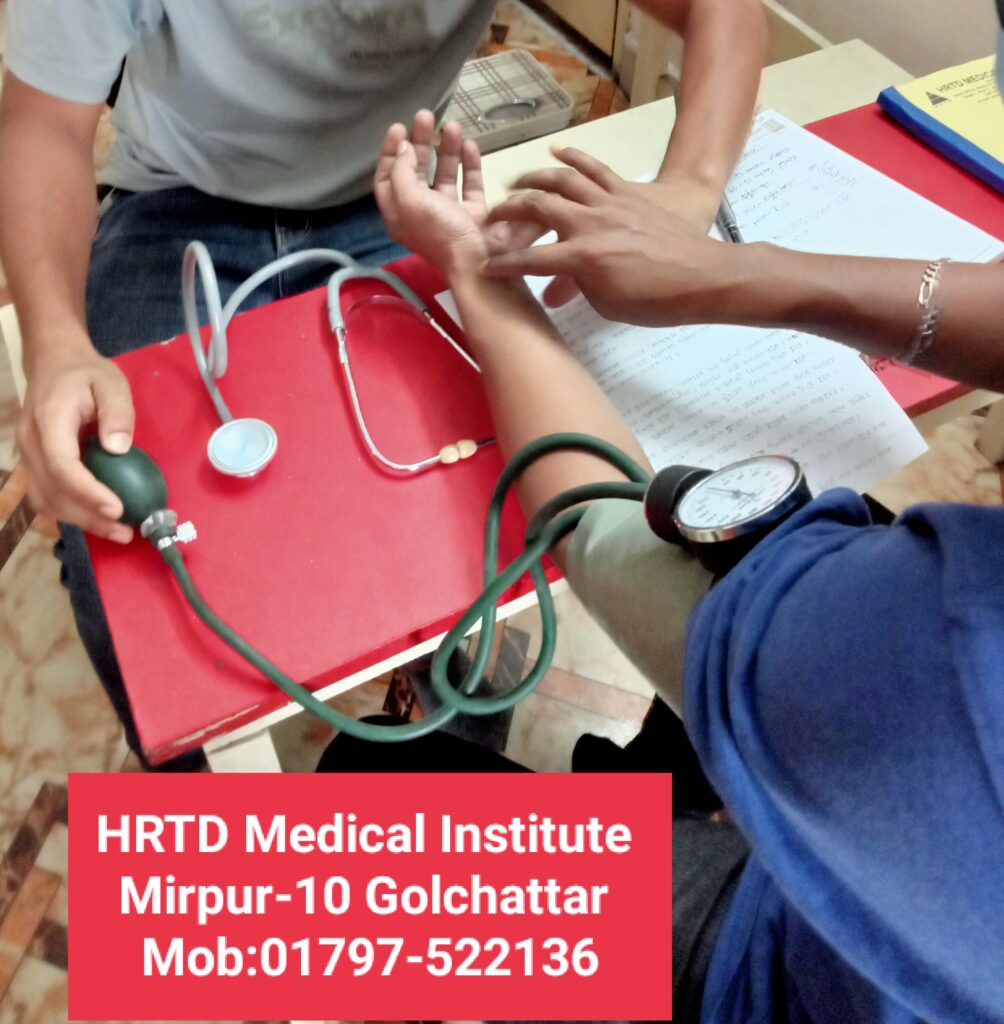
Practical Works ( Instrumental) in a 6 Month Pharmacy Course in Bangladesh. Mobile No. 01987-073965, 01797-522136. Blood Pressure Measurement, Heart Beat and Heart Rate Measurement, Pulse Measurement, Inhaler, Rotahaler, Nebulizer, IM Injection, IV Injection, SC Injection, Saline Infusion, cannula, Saturated Oxygen Measurement. If you want to complete a 6 Month Pharmacy Course in Bangladesh from HRTD Medical Institute, please contact us.
Practical Works (Drugs Show) in Pharmacy Course 6 Month
Practical Works ( Drugs Show) in 6 Month Pharmacy Course in Bangladesh. Anti Ulcer Drugs Show, Pain Killer Drugs Show, Anti vomiting Drug Show, BP-USP-INN Show, Antibiotic Drugs Show, Anti Fungal Drug Show, Anti Protozoa Drug Show, Anti Helminth Drugs Show, Cardiovascular Drug Show, Anti Diabetic Drug Show, 10 Points of Drug Knowledge Show, Motility Drugs & Anti Motility Drugs Show, Laxative Drugs Show.
Our Other Course:
Pharmacy Course, Dental Course, Nursing Course, Pathology Course, Homeopathy Course, Veterinary Course, Village Doctor Course, PDT( Post Diploma Training) Course, PPT, LMAF Training Course, LMAFP Course, Poultry Course, DMA ( Diploma Medical Assistant), Diploma in Medicine and Surgery (DMDS).
Teachers for the Best Pharmacy Course 6 months in Bangladesh
- Dr. Md. Sakulur Rahman, MBBS, CCD (BIRDEM), Course Director
- Dr. Sanjana Binte Ahmed, BDS, MPH, Assistant Course Director
- Dr. Tisha, MBBS, PGT Gyne, Assistant Course Director
- Dr. Suhana, MBBS, PGT Medicine
- Dr. Danial Hoque, MBBS, C-Card
- Dr. Tisha, MBBS
- Dr. Afrin Jahan, MBBS, PGT Medicine
- Dr. Ananna, MBBS
- Dr. Lamia Afroze, MBBS
- Dr. Amena Afroze Anu, MBBS, PGT Gyne, Assistant Course Director
- Dr. Farhana Antara, MBBS,
- Dr. Nazmun Nahar Juthi, BDS, PGT
- Dr. Farhana Sharna, MBBS
- Dr. Bushra, MBBS
- Dr. Turzo, MBBS
- Dr. Kamrunnahar Keya, BDS, PGT (Dhaka Dental College)
- Dr. Shamima, MBBS, PGT Gyne
- Dr. Alamin, MBBS
- Dr. Benzir Belal, MBBS
- Dr. Disha, MBBS
- Dr. Mahinul Islam, MBBS
- Dr. Tisha, MBBS, PGT Medicine
- Dr. Anika, MBBS, PGT
- Dr. Jannatul Ferdous, MBBS, PGT Gyne
- Dr. Jannatul Aman, MBBS, PGT
- Dr. Rayhan, BPT
- Dr. Abu Hurayra, BPT
- Dr. Sharmin Ankhi, MBBS, PGT Medicine
- Md. Monir Hossain, B Pharm, M Pharm
- Md. Monirul Islam, B Pharm, M Pharm
- Md. Feroj Ahmed, BSc Pathology, PDT Medicine
Subjects for Pharmacy Course 6 Months in Bangladesh
Pharmacy Course 6 Month subjects. Mobile No. 01987073965, 01797522136.
- Human Anatomy & Physiology-1
- Pharmacology-1
- Study of OTC Drugs
- First Aid-1 & 2
- Antimicrobial Drugs
- Pharmacology-2
Human Anatomy & Physiology for Pharmacy Course 6 Months in Bangladesh
Human Anatomy and Physiology are two complementary branches of biology that study the human body. Anatomy focuses on the physical structure and arrangement of body parts, while physiology explores how those parts function and work together to sustain life

Major Organ Systems
The human body is typically divided into 11 organ systems that work in integration:
- Integumentary System: Skin, hair, and nails; provides protection and temperature regulation.
- Skeletal System: Bones and cartilage; provide structural support and protects internal organs.
- Muscular System: Skeletal, smooth, and cardiac muscles; enables movement and generates heat.
- Nervous System: Brain, spinal cord, and nerves; acts as the primary control center for communication.
- Endocrine System: Glands that secrete hormones to regulate growth, metabolism, and reproduction.
- Cardiovascular System: Heart and blood vessels; transports oxygen, nutrients, and waste throughout the body.
- Lymphatic System: Lymph nodes and vessels; maintains fluid balance and supports the immune response.
- Respiratory System: Lungs and airways; facilitates the exchange of oxygen and carbon dioxide.
- Digestive System: Stomach, intestines, and liver; breaks down food into nutrients for absorption.
- Urinary System: Kidneys and bladder; filters blood and eliminates waste through urine.
- Reproductive System: Organs involved in producing offspring.
Pharmacology For Pharmacy Course 6 Month in Bangladesh
Important topics in Pharmacology include: pharmacokinetics and pharmacodynamics, autonomic nervous system, drugs affecting the cardiovascular system, anti-infectives, and chemotherapy. Other key areas include general pharmacology (drug absorption, distribution, metabolism, excretion, drug interactions, and adverse drug reactions), and specific drug classes like those used in the treatment of autonomic nervous system disorders, respiratory, endocrine, and gastrointestinal conditions
General Pharmacology:
Pharmacokinetics:
This encompasses the study of how drugs move through the body (absorption, distribution, metabolism, and excretion). Important aspects include bioavailability, first-pass metabolism, plasma protein binding, and factors affecting drug distribution. Understanding first-order and zero-order kinetics is also crucial.
Pharmacodynamics:
This focuses on how drugs interact with the body at a cellular and molecular level, including drug-receptor interactions, dose-response relationships, and mechanisms of drug action. Key concepts include receptor types (e.g., G protein-coupled receptors), drug antagonism (competitive and non-competitive), and drug resistance.
Adverse Drug Reactions (ADRs):
Understanding the types of ADRs, their mechanisms, and how to manage them is essential.
Drug Interactions:
Knowing how drugs can interact with each other (e.g., through enzyme induction or inhibition) and affect their efficacy and toxicity is vital.
Pharmacogenetics/Pharmacogenomics:
This field explores how genetic variations influence drug response.
Specific Systems and Disease States:
- Autonomic Nervous System (ANS): A comprehensive understanding of the ANS is crucial, including cholinergic and adrenergic drugs, anticholinergic agents, and their clinical uses. This includes specific drugs like those used in glaucoma, myasthenia gravis, and motion sickness.
- Cardiovascular System: Important topics include antihypertensive drugs, drugs for angina and myocardial infarction, antiarrhythmics, and drugs used in heart failure.
- Anti-infectives: Focus on antibacterial, antiviral, antifungal, and antiparasitic drugs, including chemotherapy for tuberculosis, leprosy, and malaria.
- Chemotherapy: Understanding the mechanisms of action and resistance to chemotherapeutic agents used in cancer treatment is important.
- Respiratory System: Includes drugs for asthma, COPD, and other respiratory conditions.
- Endocrine System: Important topics include diabetes (oral hypoglycemic agents, insulin), thyroid disorders, and hormonal contraceptives.
- Gastrointestinal System: Drugs used in peptic ulcer disease, GERD, and for managing diarrhea and constipation.
- Musculoskeletal System: Includes drugs for arthritis (NSAIDs, DMARDs), gout, and osteoporosis.
- CNS: Includes drugs for epilepsy, Parkinson’s disease, anxiety, depression, and psychosis.
- Local Anesthetics and Skeletal Muscle Relaxants: Understanding their mechanisms, uses, and adverse effects.
Study of OTC Drugs For Best Pharmacy Course 6 Month in Bangladesh
Studying over-the-counter (OTC) drugs is important due to their widespread use, potential for misuse, and the need for responsible self-care practices. Key areas of focus include understanding drug interactions, recognizing potential side effects, and ensuring proper dosage and administration, especially for vulnerable populations.
Here’s a breakdown of important topics:
1. Responsible Use and Self-Medication:
Understanding OTC medications:
Knowing the difference between OTC and prescription drugs, and understanding that OTCs are not completely risk-free, is crucial.
Self-diagnosis:
Consumers need to be aware of when self-treating with OTCs is appropriate and when to seek professional medical advice.
Proper dosage and administration:
Clear labeling, understanding dosage instructions, and recognizing potential interactions with other medications or conditions are essential.
First Aid for Best Pharmacy Course 6 Month in Bangladesh
Main first aid topics include life support skills like CPR and using an AED, managing emergencies such as bleeding, choking, and burns, and treating injuries from fractures to head trauma. Other key areas are environmental emergencies like heat and cold-related conditions, medical emergencies like heart attacks, and managing medical conditions such as anaphylaxis and diabetes.
Life support
- Cardiopulmonary Resuscitation (CPR) and using an Automated External Defibrillator (AED)
- Managing choking through techniques like back blows and abdominal thrusts (Heimlich maneuver)
- Recognizing and treating shock
- Assessing and managing an unconscious casualty
Medical emergencies
- Heart attacks
- Strokes (recognizing the signs)
- Anaphylaxis (severe allergic reactions)
- Asthma emergencies
- Diabetic emergencies
- Poisoning
Injury and trauma
- Controlling severe bleeding and managing wounds
- Burns (including thermal, chemical, and electrical)
- Fractures, sprains, and dislocations
- Head, face, and spinal injuries
- Eye injuries
Environmental and other issues
- Bites and stings (from insects, animals, sea creatures)
- Heat- and cold-induced conditions (heat stroke, hypothermia)
- Swallowed objects or substances
- Infection control during first aid
Incident management and principles
- DRSABCD action plan: Danger, Response, Send for help, Airways, Breathing, CPR, Defibrillation
- Assessing the scene and monitoring the victim
- Calling emergency services and managing the response
- Principles of first aid: Preserve life, prevent deterioration, promote recovery
Antimicrobial Drugs for Pharmacy Course 6 Month in Bangladesh
Main topics for a subject on antimicrobial drugs include mechanisms of action, characteristics (like spectrum and side effects), resistance to antimicrobial drugs, and specific classes of antimicrobial agents, such as antibacterials, antifungals, and antivirals. Other important topics are antimicrobial stewardship and how to approach antimicrobial therapy in patients, considering factors like allergies, organ function, and the specific infection.
Main topics
- Mechanisms of Action: How different antimicrobial drugs work to kill or inhibit microbes, including inhibiting cell wall synthesis, protein synthesis, nucleic acid synthesis, or metabolic pathways.
- Characteristics of Antimicrobial Drugs: Key properties of these drugs, such as their spectrum of activity (e.g., broad-spectrum vs. narrow-spectrum), and how to determine their efficacy and monitor for side effects.
- Antimicrobial Resistance (AMR): The development of resistance in microorganisms, including the mechanisms of resistance, multiple drug resistance, and strategies for preventing it.
- Specific Antimicrobial Agents: The different types of drugs, categorized by the pathogens they target.
- Antibacterial Agents: Drugs that kill or inhibit bacteria, such as penicillin and tetracyclines.
- Antifungal Agents: Drugs that target fungi and yeasts.
- Antiviral Agents: Drugs used to treat viral infections.
- Antiprotozoan and Antihelminthic Agents: Drugs that target protozoa and parasitic worms, respectively.
- Antimicrobial Stewardship (AMS): Principles and practices for the responsible use of antimicrobials in healthcare and agriculture to prevent resistance and ensure the availability of effective treatments for the future.
- Approach to Antimicrobial Therapy: The clinical process for selecting and using antimicrobial drugs, which involves evaluating patient-specific factors like age, allergies, kidney and liver function, immune status, and recent antibiotic use.
- Classification and Administration: Methods for categorizing antimicrobial drugs and the different ways they are administered (e.g., orally, intravenously, topically).
- Role of Other Agents: The distinct but related roles of other agents, such as antiseptics (applied to skin) and disinfectants (for non-living surfaces).
Pharmacology-2 for Pharmacy Course 6 Month in Bangladesh
Pharmacology-2 main topics include the autonomic nervous system, cardiovascular system drugs, central nervous system drugs, anti-infective agents, and endocrine drugs. It builds on general pharmacology by focusing on specific drug classes, their mechanisms, and uses, covering areas like anti-hypertensives, anesthetics, sedatives, antibiotics, and hormones.
Core areas of study
- Autonomic Nervous System: Cholinergics, anticholinergics, adrenergics, and adrenergic blockers, including drugs for glaucoma and motion sickness.
- Cardiovascular System: Anti-hypertensive drugs, diuretics, drugs for angina, congestive heart failure, arrhythmias, and hyperlipidemia.
- Central Nervous System: General and local anesthetics, sedatives, hypnotics, anxiolytics, antidepressants, anti-epileptics, and drugs for Parkinson’s disease.
- Anti-infective Agents: Antibiotics (penicillins, cephalosporins, etc.), antifungals, antivirals, and drugs for chemotherapy of infections like malaria, tuberculosis, and cancer.
- Endocrine Drugs: Hormonal medications, including antidiabetics, thyroid drugs, and oral contraceptives.
- Other important topics: Autacoids, non-steroidal anti-inflammatory drugs (NSAIDs), drugs used for gout, and drugs affecting the gastrointestinal (GIT) system.
Drug For Cough Subject for Pharmacy Course 6 Month
This is an Important Subject for Pharmacy Course 6 Month subjects. Mobile No. 01987073965, 01797522136.Mirpur-10 (Golchattar), Dhaka, Bangladesh.
In a Pharmacy course, medications for cough (antitussives and expectorants) are classified based on their mechanism of action and the type of cough they treat. For 2025, pharmacy students are expected to understand the distinction between centrally acting suppressants for non-productive coughs and peripherally acting agents for productive coughs.
1. Antitussives (Cough Suppressants)
These drugs act on the central or peripheral nervous system to suppress the cough reflex. They are primarily indicated for dry, non-productive coughs.
- Centrally Acting Opioids:
- Codeine: Acts on the cough center in the medulla. Clinical Note: Avoid in children under 12 and use caution in those under 18 with breathing issues.
- Centrally Acting Non-Opioids:
- Dextromethorphan (Delsym, Robitussin): A common OTC medication that acts on the medulla to suppress the cough reflex. It has a lower abuse potential than codeine but may cause drowsiness.
- Peripherally Acting Agents:
- Benzonatate (Tessalon): Anesthetizes stretch receptors in the respiratory passages, reducing the cough reflex. Caution: Capsules must be swallowed whole to avoid life-threatening numbing of the throat.
2. Expectorants and Mucolytics
These agents are used for productive (chesty) coughs to help clear mucus from the airways.
- Expectorants:
- Guaifenesin (Mucinex): The only FDA-approved expectorant in the U.S.. It increases the volume and reduces the viscosity of secretions to facilitate their removal.
- Mucolytics:
- Acetylcysteine: Chemically breaks down mucus viscosity.
- Bromhexine / Ambroxol: Agents that thin mucus to aid in clearance.
3. Adjuvant and Combination Medications
- Antihistamines: First-generation agents like Diphenhydramine (Benadryl) or Promethazine are often included in night-time cough formulations for their sedative and anticholinergic (drying) effects.
- Demulcents: Simple syrups, honey, or glycerin that coat and soothe the pharynx. 2025 guidelines often recommend honey as a first-line non-pharmacological treatment.
- Decongestants: Such as Pseudoephedrine, used when cough is associated with post-nasal drip or nasal congestion.


