 HRTD Medical Institute HRTD Medical Institute

LMAF Course 6 Months Details:
LMAF Course 6 months : Mobile Number. 01987073965,01797522136.Hotline- 01969947171The full Meaning of LMAF is (Local Medical Assistant & Family welfare). A LMAF course of 6 months duration is a Short Type of LMAF course in Bangladesh This Course contains 5 subjects in 6 months. The Subjects are Anatomy & Physiology, Pharmacology-1, Study of OTC Drugs, First Aid, Practice of Medicine,Hematology-1 & Practice of Medicine.
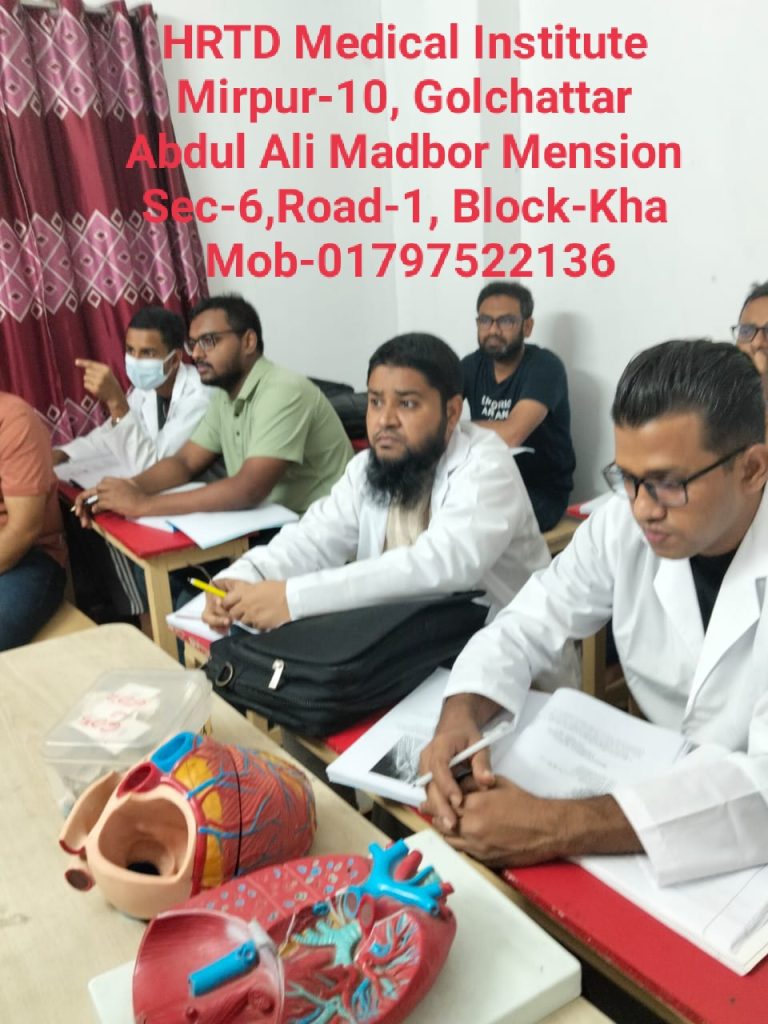
Location of LMAF Course 6 Months
Location of Local Medical Assistant & Family welfare (LMAF) course 1 Year Training Institute. Mobile Number.01987073965. 01941123488, 01797522136. HRTD Medical Institute , Abdul Ali Madbor Mention, Section-6, Block-Kha, Road-1, Plot-11, Mirpur-10 (Gol-Chattar) Metro Rail Pilar NO-249, Dhaka-1216. It is situated by the West Side of Agrani Bank, the South Side of Fire Service, Islami Bank, Janata Bank, Social Islami Bank, Medinova, Ibrahim Diabetic Hospital, the North Side of Baitul Mamur Jame Mosjid, Grave of Baitul Mamur Jame Mosjid, and East Side of Maliha Apartment.
Course Fee for LMAF Course 6 Months in Dhaka, Bangladesh
Course Fee for LMAF Course 6 months. Mobile Number. 01987073965. 01941123488, 01797522136. DMS Course Fee for 1 Year TK 52,500/- Including Admission Fee, Monthly Fee & Exam Fee.
LMAF Course 6 Months Admission Eligibility in Dhaka, Bangladesh
LMAF Course 6 Months Admission Eligibility. Mobile Number. 01987073965. 01941123488, 01797522136. SSC or Equivalent/HSC/ Degree/ Masters from any Background (Science/ Arts/ Commerce/ Technical).
Document for admission in LMAF Course 6 Months
LMAF Course in Dhaka. Mobile No: 01987-073965, 01797-522136. HRTD Medical Institute.
Photocopy of Certificate, Photocopy of NID, Passport Size Photo 4 Pcs. Without NID, a Birth Certificate is allowed for an emergency case.
Subjects For LMAF Course 6 Months
LMAF Course 6 Months Contains 5 Subject. Human Anatomy & Physiology,Pharmacology-1,Study of OTC, First Aid, Practice of Medicine,Hematology-1,Pathology for Medical Practice.
Teachers For LMAF Course 6 Months
- Dr. Md. Sakulur Rahman, MBBS, CCD (BIRDEM), Course Director
- Dr. Sanjana Binte Ahmed, BDS, MPH, Assistant Course Director
- Dr. Tisha, MBBS, PGT Gyne, Assistant Course Director
- Dr. Suhana, MBBS, PGT Medicine
- Dr. Danial Hoque, MBBS, C-Card
- Dr. Tisha, MBBS
- Dr. Afrin Jahan, MBBS, PGT Medicine
- Dr. Ananna, MBBS
- Dr. Lamia Afroze, MBBS
- Dr. Amena Afroze Anu, MBBS, PGT Gyne, Assistant Course Director
- Dr. Farhana Antara, MBBS,
- Dr. Nazmun Nahar Juthi, BDS, PGT
- Dr. Farhana Sharna, MBBS
- Dr. Bushra, MBBS
- Dr. Turzo, MBBS
- Dr. Kamrunnahar Keya, BDS, PGT (Dhaka Dental College)
- Dr. Shamima, MBBS, PGT Gyne
- Dr. Alamin, MBBS
- Dr. Benzir Belal, MBBS
- Dr. Disha, MBBS
- Dr. Mahinul Islam, MBBS
- Dr. Tisha, MBBS, PGT Medicine
- Dr. Anika, MBBS, PGT
- Dr. Jannatul Ferdous, MBBS, PGT Gyne
- Dr. Jannatul Aman, MBBS, PGT
- Dr. Rayhan, BPT
- Dr. Abu Hurayra, BPT
- Dr. Sharmin Ankhi, MBBS, PGT Medicine
- Md. Monir Hossain, B Pharm, M Pharm
- Md. Monirul Islam, B Pharm, M Pharm
- Md. Feroj Ahmed, BSc Pathology, PDT Medicine
Practical Work For LMAF Course 6 Months
- Heart Beat, Heart Rate
- Heart Sound,Pulse
- Blood Pressure, Hypertension, Hypotension
- First Aid Box
- Auscultation
- Inhaler, Rotahaler
- Nebulizer
- Glucometer Blood Glucose
- Injection I/V
- Injection I/M
- Cleaning,Dressing,Bandaging
- Saline
- CPR
- Stitch
- Body Temperature
- Nasal Tube Gel ,Hand Wash
- Blood Grouping
- Cyanosis, Dehydration Test, Edema Test
Subjects for LMAF Course 6 Months
LMAF Course 6 Months. Mobile Number: 01797-522136, 01987-073965
- Human Anatomy & Physiology-1
- Pharmacology-1
- Study of OTC Drugs
- First Aid-1 & 2
- Practice of Medicine
- Hematology-1
- Pathology for Medical Practice
Some Practical Class Details Given Below for LMAF Course 6 Months
1. Heart Beat Practical for LMAF Course 6 Months
Definition
Heart beat is one complete cycle of heart contraction and relaxation that pumps blood throughout the body.
What happens in one heart beat?
- Systole – heart contracts → blood is pumped out
- Diastole – heart relaxes → heart fills with blood
➡️ These two together make one heart beat
Normal heart beat sounds
- “Lub” (S1) – closing of mitral & tricuspid valves
- “Dub” (S2) – closing of aortic & pulmonary valves
Function
- Supplies oxygen & nutrients
- Removes waste products
- Maintains blood pressure
2. Heart Rate Practical for LMAF Course 6 Months
Definition
Heart rate is the number of heart beats per minute (bpm).
Normal Heart Rate (Resting)
| Age Group | Normal Heart Rate |
|---|---|
| Newborn | 120–160 bpm |
| Infant | 100–140 bpm |
| Child | 80–120 bpm |
| Adult | 60–100 bpm |
| Athlete | 40–60 bpm |
3. Difference Between Heart Beat & Heart Rate
| Feature | Heart Beat | Heart Rate |
|---|---|---|
| Meaning | One pumping cycle | Beats per minute |
| Unit | Single beat | bpm |
| Example | 1 contraction + relaxation | 72 beats/min |
4. Measurement of Heart Rate
Sites
- Radial artery (wrist)
- Carotid artery (neck)
- Apical (stethoscope)
Methods
- Palpation
- Auscultation
- ECG / Monitor
5. Abnormal Heart Rate
Tachycardia
- Heart rate >100 bpm
- Causes: fever, anxiety, exercise, anemia
Bradycardia
- Heart rate <60 bpm
- Causes: athletes, sleep, heart disease
Blood Pressure Practical for LMAF Course 6 Months
Definition: Blood Pressure is the force exerted by circulating blood on the walls of arteries during heart contraction and relaxation.
1. Systolic Blood Pressure (SBP)
- Pressure during ventricular contraction
- Normal: ~ 120 mmHg
2. Diastolic Blood Pressure (DBP)
- Pressure during ventricular relaxation
- Normal: ~ 80 mmHg
👉 Normal BP = 120/80 mmHg
Units of Blood Pressure
- Measured in millimeters of mercury (mmHg)
Normal Blood Pressure Values
| Category | Systolic (mmHg) | Diastolic (mmHg) |
|---|---|---|
| Normal | <120 | <80 |
| Elevated | 120–129 | <80 |
| Hypertension Stage-1 | 130–139 | 80–89 |
| Hypertension Stage-2 | ≥140 | ≥90 |
| Hypotension | <90 | <60 |
Factors Affecting Blood Pressure
- Age
- Exercise
- Stress & emotions
- Body weight
- Diet (salt intake)
- Smoking & alcohol
- Diseases (heart, kidney)
- Drugs
Measurement of Blood Pressure
Instruments
- Sphygmomanometer
- Stethoscope
- Digital BP machine
Sites
- Brachial artery (most common)
Method
- Auscultatory method
- Palpatory method
Abnormal Blood Pressure
Hypertension (High BP)
- BP ≥140/90 mmHg
- Causes: obesity, stress, smoking, kidney disease
- Complications: stroke, heart attack, kidney failure
Hypotension (Low BP)
- BP <90/60 mmHg
- Causes: dehydration, blood loss, shock
- Symptoms: dizziness, fainting
Nebulizer Practical for LMAF Course 6 Months
Definition
Nebulization is a procedure in which liquid medicine is converted into fine mist (aerosol) and inhaled into the lungs for treatment of respiratory conditions.
Purpose / Indications
- Bronchial asthma
- COPD
- Bronchospasm
- Pneumonia
- Acute respiratory distress
- Thick respiratory secretions
Common Drugs Used
- Salbutamol (bronchodilator)
- Ipratropium bromide
- Budesonide
- Normal saline (0.9%)
Articles Required
- Nebulizer machine
- Nebulizer chamber
- Mask / mouthpiece
- Prescribed medication
- Normal saline
- Syringe / dropper
- Gloves
- Towel / tissue
Procedure (Practical Steps)
Before Procedure
- Explain procedure to patient
- Wash hands & wear gloves
- Check doctor’s order
- Assess respiratory status (RR, SpO₂, breath sounds)
- Place patient in sitting / semi-Fowler’s position
During Procedure
- Add prescribed drug into nebulizer chamber
- Add normal saline (total volume usually 3–5 ml)
- Connect chamber to mask & machine
- Switch on nebulizer
- Place mask properly on patient’s face
- Instruct patient to breathe slowly & deeply
- Continue until mist stops (≈ 5–10 minutes)
After Procedure
- Switch off nebulizer
- Remove mask
- Encourage patient to rinse mouth (especially after steroid)
- Clean & dry nebulizer parts
- Wash hands
- Document procedure & patient response
Glucometer Blood Glucose Practical for LMAF Course 6 Months
A glucometer is a portable electronic device used for self-monitoring of blood glucose (SMBG), which is crucial for managing diabetes. It provides a quick snapshot of current blood sugar levels via a small finger-prick blood sample.
Equipment Needed
- Glucometer: The main electronic device that reads the test strip and displays the result.
- Test Strips: Small, disposable strips containing a chemical (usually an enzyme like glucose oxidase) that reacts with the blood’s glucose.
- Lancet: A small, sterile needle used to prick the skin to get a blood drop.
- Lancing Device: A pen-like device that holds the lancet and helps control the depth of the prick for comfort.
- Alcohol Swabs/Soap and Water: For cleaning the puncture site.
- Gauze/Cotton ball: To stop the bleeding after the prick.
- Sharps Container: A hard plastic container for safe disposal of used lancets.
Step-by-Step Practical Procedure
- Preparation: Wash your hands thoroughly with soap and warm water and dry them completely. This prevents contamination from food residue or other substances that could affect the reading.
- Insert the Test Strip: Take a new test strip from its container and insert it into the glucometer. The meter should turn on automatically and indicate it is ready for a blood sample (often with a flashing blood drop symbol).
- Prepare the Lancing Device: Insert a new, sterile lancet into the lancing device and set the penetration depth.
- Obtain Blood Sample: Prick the side of your fingertip (less painful than the pad) with the lancing device.
- Apply Blood: Gently massage your finger to form a small, round drop of blood. Touch the tip or edge of the test strip to the blood drop, and the strip will automatically draw in the required amount of blood.
- Read and Record: The meter will display your blood glucose level on the screen within a few seconds. Record the result in a log book, noting the time and any relevant factors like meals, exercise, or illness.
- Cleanup: Place a cotton ball or gauze on the puncture site until the bleeding stops. Dispose of the used test strip and lancet in a sharps container according to local guidelines.
Injection Practical for LMAF Course 6 Months
An IV (intravenous) injection delivers fluids, medications, or blood products directly into a patient’s bloodstream via a needle or catheter inserted into a vein, offering the fastest way to get substances into the body for rapid effects, precise dosing, or long-term infusions. It’s used for emergencies, hydration, nutrition, and medications that need immediate or controlled distribution, avoiding the liver’s first-pass metabolism. While generally safe, risks include pain, swelling, infection, or allergic reactions, and the procedure requires trained healthcare professionals.
How it Works & Types
- Method: A thin tube (cannula) is placed into a vein, often in the arm, allowing for a single injection followed by continuous or intermittent infusion of liquids.
- Single Injection: A quick shot of medication into the vein.
- IV Drip/Infusion: A bag of fluid or medication slowly drips into the vein over time, controlled by a roller clamp.
Common Uses
- Emergency Care: For life-saving medications or fluids when speed is critical.
- Hydration & Nutrition: To deliver fluids, electrolytes, or nutrients directly.
- Medication Delivery: For drugs that are irritating orally, need precise dosing, or require a large dose over time.
- Blood Transfusions: Administering blood products.
Risks & Side Effects
- Common: Pain, redness, swelling, or bruising at the site.
- Serious (Less Common): Infection, infiltration (fluid leaking into tissues), hematoma (blood collection), air embolism, or allergic reactions.
Key Steps (Simplified)
- Preparation: Verify patient, medication, and gather sterile supplies.
- Site Selection: Find a suitable vein, often in the arm.
- Insertion: Clean the skin and insert the needle/cannula into the vein.
- Connection: Attach the fluid line or administer the injection.
- Monitoring: Set the drip rate and watch for issues.
An intramuscular (IM) injection delivers medication deep into muscle tissue, allowing for rapid absorption into the bloodstream due to the muscle’s rich blood supply, making it faster than subcutaneous injections but slower than intravenous ones. Common sites include the deltoid, gluteal (buttocks), and vastus lateralis (thigh) muscles, chosen to avoid nerves and vessels. It’s used for vaccines and drugs needing quick, effective delivery, often avoiding the liver’s “first-pass” metabolism.
How It Works
- A needle passes through skin and fat into a muscle.
- Medication is quickly absorbed into the body’s circulatory system.
Common Sites
- Deltoid: Upper arm (for smaller volumes).
- Gluteal (Dorsogluteal/Ventrogluteal): Buttocks (requires careful landmarking).
- Vastus Lateralis: Thigh (often used in infants).
Key Advantages
- Faster Absorption: More blood vessels in muscles than subcutaneous tissue.
- Bypasses Liver: Avoids first-pass metabolism, improving drug effectiveness.
- For Larger Volumes: Can deliver more medication (2-5 mL) than subcutaneous shots.
Used For
- Vaccines (like flu shots).
- Certain hormones, antibodies, and pain medications.
- Oil-based medications or irritating solutions.
The Process (General Steps)
- Site Selection: Identify landmarks for the chosen muscle.
- Cleanse: Clean the skin with an antiseptic swab.
- Inject: Insert the needle quickly at a 90-degree angle into the muscle.
- Aspirate (Sometimes): Pull back the plunger slightly to check for blood (not always done for vaccines).
- Administer: Slowly push the medication.
- Withdraw & Pressure: Remove the needle and apply gentle pressure (no rubbing).
Some Subject Details for LMAF Course 6 Months
Human Anatomy & Physiology for LMAF Course 6 Months
The Study of the body Structure and its function is Anatomy & Physiology. Here we discuss the systems of the human body and its organ, Tissues, and cells. The systems of the human body are the digestive system, Respiratory system, Cardiovascular system, Skeletal system, Muscular system, nervous system, Endocrine system, Immune System, Integumentary System and Urinary System.
Definition
Anatomy (English):
Anatomy is the study of the structure of the human body and the relationship between body parts.
অ্যানাটমি (বাংলা):
অ্যানাটমি হলো মানবদেহের গঠন, অঙ্গ-প্রত্যঙ্গ এবং তাদের পারস্পরিক সম্পর্কের অধ্যয়ন।
Physiology (English):
Physiology is the study of the functions of the human body and how body parts work.
ফিজিওলজি (বাংলা):
ফিজিওলজি হলো মানবদেহের বিভিন্ন অঙ্গ কীভাবে কাজ করে তার অধ্যয়ন।
Levels of Organization (শরীরের গঠনের স্তর)
- Cell (কোষ) – দেহের সবচেয়ে ছোট জীবিত একক
- Tissue (টিস্যু) – একই ধরনের কোষের সমষ্টি
- Organ (অঙ্গ) – বিভিন্ন টিস্যু দিয়ে গঠিত (যেমন: হৃদপিণ্ড)
- System (সিস্টেম) – একাধিক অঙ্গের সমন্বয়
- Organism (সম্পূর্ণ মানবদেহ)
Major Systems of Human Body
| System | Main Function |
|---|---|
| Skeletal System | দেহকে আকৃতি ও সাপোর্ট দেয় |
| Muscular System | চলাচল ও শক্তি উৎপাদন |
| Nervous System | দেহের নিয়ন্ত্রণ ও সমন্বয় |
| Cardiovascular System | রক্ত পরিবহন |
| Respiratory System | শ্বাস-প্রশ্বাস |
| Digestive System | খাদ্য হজম |
| Urinary System | বর্জ্য নির্গমন |
| Endocrine System | হরমোন নিঃসরণ |
| Reproductive System | প্রজনন |
| Integumentary System | ত্বক ও সুরক্ষা |
কয়েকটি সিস্টেম সম্পর্কে আলোচনা করা হলো:
1. Skeletal System
Function:
- Gives shape and support to the body
- Protects vital organs (brain, heart, lungs)
- Helps in body movement
- Produces blood cells in bone marrow
Main Parts:
- Bones (206 bones)
- Joints
- Cartilage
2. Muscular System
Function:
- Enables movement of the body
- Maintains posture
- Produces heat
Types of Muscles:
- Skeletal muscle – voluntary
- Smooth muscle – involuntary
- Cardiac muscle – found in the heart
3. Nervous System
Function:
- Controls and coordinates body activities
- Receives and responds to stimuli
- Responsible for thinking, memory, and emotions
Main Parts:
- Brain
- Spinal cord
- Nerves
4. Cardiovascular System
Function:
- Circulates blood throughout the body
- Transports oxygen, nutrients, and hormones
- Removes waste products
Main Parts:
- Heart
- Blood
- Blood vessels (arteries, veins, capillaries)
5. Respiratory System
Function:
- Helps in breathing
- Supplies oxygen to the blood
- Removes carbon dioxide from the body
Main Parts:
- Nose
- Trachea
- Lungs
- Alveoli
6. Digestive System
Function:
- Digestion of food
- Absorption of nutrients
- Elimination of waste
Main Parts:
- Mouth
- Esophagus
- Stomach
- Intestines
- Liver and pancreas
Pharmacology-1 for LMAF Course 6 Months
1. Definition of Pharmacology
Pharmacology is the branch of medical science that deals with drugs, their sources, actions, uses, side effects, and mechanisms in the human body.
2. Drug – Definition
A drug is a chemical substance that is used to diagnose, prevent, treat, or cure disease.
3. Branches of Pharmacology
- Pharmacokinetics – What the body does to the drug
- Pharmacodynamics – What the drug does to the body
- Pharmacotherapeutics – Use of drugs in treatment
- Toxicology – Study of harmful effects of drugs
- Chemotherapy – Drugs used to treat infections and cancer
4. Pharmacokinetics (ADME)
A – Absorption:
How a drug enters the bloodstream
D – Distribution:
How the drug spreads in the body
M – Metabolism:
Breakdown of drugs mainly in the liver
E – Excretion:
Removal of drugs mainly through kidneys (urine)
5. Pharmacodynamics
- Drug action and effect
- Receptor interaction
- Dose–response relationship
Example:
Paracetamol reduces pain and fever.
6. Routes of Drug Administration
- Oral (by mouth)
- Sublingual
- Intravenous (IV)
- Intramuscular (IM)
- Subcutaneous (SC)
- Topical
- Inhalation
7. Types of Drugs
- Analgesics (pain killers)
- Antibiotics
- Antipyretics (reduce fever)
- Antiseptics
- Sedatives
8. Adverse Drug Reactions (ADR)
- Nausea
- Vomiting
- Allergy
- Drowsiness
9. Importance of Pharmacology for Nurses / Physiotherapists
- Safe drug administration
- Understanding drug effects
- Prevention of medication errors
- Patient education
10. Common Terms
- Dose: Amount of drug given
- Therapeutic effect: Desired effect
- Side effect: Unwanted effect
- Overdose: Excess amount of drug
Study of OTC for LMAF Course 6 Months
OTC Drugs are important for all Medical Assistant Courses. These Drugs are Emergency and safe for the patients. The Study of OTC Drugs improves the quality of practice. Some OTC Drugs are Albendazole, Ascorbic Acid, Calcium, Multivitamins, Vitamin B Complex, Omeprazole, Oral Rehydration Salt, Salbutamol etc.
1. Definition of OTC Drugs
OTC (Over-the-Counter) drugs are medicines that can be purchased without a doctor’s prescription and are used for minor illnesses.
2. Common Uses of OTC Drugs
- Headache
- Fever
- Cold & cough
- Mild pain
- Acidity
- Minor skin problems
3. Classification of OTC Drugs
A. Analgesics & Antipyretics
Use: Pain and fever
- Paracetamol
- Ibuprofen
⚠️ Side effects: Liver damage (overdose), gastric irritation
B. Antacids
Use: Acidity, heartburn
- Aluminum hydroxide
- Magnesium hydroxide
⚠️ Side effects: Constipation, diarrhea
C. Antihistamines
Use: Allergy, cold, sneezing
- Cetirizine
- Loratadine
⚠️ Side effects: Drowsiness
D. Cough & Cold Preparations
Use: Cough, sore throat
- Dextromethorphan
- Guaifenesin
E. Laxatives
Use: Constipation
- Isabgol
- Bisacodyl
F. Antiseptics & Disinfectants
Use: Wound cleaning
- Povidone-iodine
- Chlorhexidine
4. Advantages of OTC Drugs
- Easily available
- Low cost
- Useful for minor ailments
- Saves time
5. Disadvantages / Risks
- Wrong drug use
- Overdose
- Drug interactions
- Masking of serious disease
First Aid for LMAF Course 6 Months
First Aid is an important subject for Medical courses including Diplomas in Medicine & Surgery course. RMP Courses, LMAF Courses, Paramedical Courses, DMA Courses, DMS Courses, Nursing Courses, Dental Courses, Pathology Courses, Physiotherapy Courses, Caregiver courses etc. Here we discuss shock, Classification Shock, causes of Shock, Stages of Shock, Clinical Features of Shock, Hypovolemic Shock, Cardiogenic Shock, Neurogenic Shock, Traumatic Shock, Burn Shock, Electric Shock, Psychogenic Shock, Anaphylactic Shock, First Aid of Shock, First Aid of cut, First Aid of Snake Bite, First Aid of Accidental Injury etc.
1. Definition
First Aid is the immediate and temporary care given to an injured or suddenly ill person before professional medical help is available.
2. Aims of First Aid
- Preserve life
- Prevent further injury
- Promote recovery
3. Basic Principles of First Aid
- Stay calm and ensure scene safety
- Check Airway, Breathing, Circulation (ABC)
- Call for medical help if needed
- Do not move the patient unnecessarily
4. Common First Aid Situations
A. Bleeding
- Apply direct pressure
- Elevate the injured part
- Use a clean bandage
B. Burns
- Cool the burn with running water (10–20 minutes)
- Do not break blisters
- Cover with a clean cloth
C. Fracture
- Immobilize the affected area
- Use splints if available
- Do not try to straighten the bone
D. Fainting
- Lay the person flat
- Raise legs
- Loosen tight clothing
E. Choking
- Encourage coughing
- Perform abdominal thrusts (Heimlich maneuver) if needed
F. Shock
- Lay patient down
- Keep warm
- Do not give food or drink
5. First Aid Kit Contents
- Sterile gauze
- Bandages
- Antiseptic solution
- Scissors
- Gloves
- Cotton
- Pain reliever
6. Importance of First Aid
- Saves lives
- Reduces severity of injury
- Provides confidence in emergencies
Practice of Medicine For LMAF Course 6 Months
LMAF Course 6 Months for Important topics in the practice of medicine include fundamental sciences like anatomy, physiology, and pathology; core clinical subjects such as internal medicine, surgery, and pediatrics; and practical applications like pharmacology, diagnostic procedures, and patient management. Additionally, crucial areas include public health (sanitation, vaccination), family medicine (addressing a wide range of patient needs), and increasingly, community medicine (epidemiology, health indicators), and interdisciplinary fields like addiction medicine, forensic medicine, and genomic medicine.
1. Definition
Practice of Medicine is the branch of medical science that deals with the diagnosis, treatment, and prevention of diseases using clinical knowledge and skills.
2. Scope of Practice of Medicine
- History taking
- Physical examination
- Diagnosis of disease
- Medical management (drug & non-drug)
- Prevention of disease
- Follow-up care
3. Components of Practice of Medicine
A. History Taking
- Chief complaints
- History of present illness
- Past medical history
- Drug history
- Family and social history
B. Physical Examination
- General examination
- Systemic examination (CVS, RS, CNS, GIT, etc.)
C. Diagnosis
- Provisional diagnosis
- Differential diagnosis
- Confirmed diagnosis
D. Treatment
- Drug therapy (medicines)
- Non-drug therapy (diet, rest, exercise, physiotherapy)
E. Prevention of Disease
- Primary prevention (immunization, health education)
- Secondary prevention (early diagnosis)
- Tertiary prevention (rehabilitation)
4. Common Diseases Studied in Practice of Medicine
- Hypertension
- Diabetes mellitus
- Bronchial asthma
- Tuberculosis
- Anemia
- Heart disease
- Peptic ulcer disease
Hematology-1 For LMAF Course 6 Months
Important hematology topics include anemias, bleeding and clotting disorders (like hemophilia), malignancies (leukemia, lymphoma, myeloma), blood transfusions, and bone marrow and stem cell transplantation. Other key subjects are blood composition, plasma proteins, and the basics of hematopoiesis and hemostasis.
1. Introduction to Hematology
Hematology is the branch of medical science concerned with the study of blood, blood-forming organs (bone marrow, spleen, lymph nodes), and blood disorders.
Functions of blood (overview):
- Transport of oxygen, nutrients, hormones
- Removal of carbon dioxide and waste
- Regulation of body temperature and pH
- Protection against infection
- Prevention of blood loss (clotting)
2. Composition of Blood
Total blood volume ≈ 5–6 liters in adults.
A. Plasma (≈55%)
Plasma is the liquid part of blood.
Components:
- Water (90–92%)
- Plasma proteins
- Albumin – maintains osmotic pressure
- Globulin – immunity (antibodies)
- Fibrinogen – blood clotting
- Electrolytes – Na⁺, K⁺, Ca²⁺
- Nutrients – glucose, amino acids, lipids
- Hormones & enzymes
- Waste products – urea, creatinine
Functions of Plasma:
- Maintains blood pressure
- Transport medium
- Helps in clotting and immunity
3. Formed Elements of Blood
A. Red Blood Cells (RBCs / Erythrocytes)
Structure:
- Biconcave, non-nucleated
- Diameter ≈ 7.5 µm
Normal Count:
- Male: 5–6 million/mm³
- Female: 4–5 million/mm³
Hemoglobin (Hb):
- Iron-containing protein
- Carries oxygen
Life Span:
- Approximately 120 days
Functions:
- Oxygen transport
- Carbon dioxide transport
- Acid–base balance
RBC Disorders:
- Anemia – low RBC or Hb
- Polycythemia – increased RBC count
B. White Blood Cells (WBCs / Leukocytes)
Normal Count:
- 4,000–11,000/mm³
Function:
- Body defense and immunity
Types of WBCs
1. Neutrophils (60–70%)
- First line of defense
- Fight bacterial infection
2. Lymphocytes (20–30%)
- B cells – antibody production
- T cells – cell-mediated immunity
3. Monocytes (2–8%)
- Phagocytosis
- Become macrophages
4. Eosinophils (1–4%)
- Allergic reactions
- Parasitic infections
5. Basophils (0.5–1%)
- Release histamine
- Inflammation and allergy
WBC Disorders:
- Leukocytosis – increased WBC
- Leukopenia – decreased WBC
- Leukemia – cancer of blood cells
C. Platelets (Thrombocytes)
Normal Count:
- 150,000–400,000/mm³
Life Span:
- 7–10 days
Function:
- Blood clotting
- Prevention of bleeding
Disorder:
- Thrombocytopenia – low platelet count
4. Hemostasis (Blood Clotting)
Steps:
- Vasoconstriction
- Platelet plug formation
- Coagulation
- Fibrinogen → Fibrin (clot formation)
Importance:
- Prevents excessive blood loss
5. Hemoglobin (Hb) in Detail
Normal Values:
- Male: 13–18 g/dL
- Female: 12–16 g/dL
Functions:
- Oxygen transport
- Maintains blood pH
Abnormalities:
- Low Hb → anemia
- High Hb → polycythemia
6. Blood Groups
ABO Blood Group System
- Group A
- Group B
- Group AB
- Group O
Rh Factor
- Rh positive
- Rh negative
Importance:
- Safe blood transfusion
- Pregnancy (Rh incompatibility)
7. Blood Formation (Hematopoiesis)
Site:
- Bone marrow (main site)
Process:
- Stem cells → RBCs, WBCs, platelets
8. Clinical Importance of Hematology
- Diagnosis of anemia and infections
- Monitoring treatment response
- Blood transfusion safety
- Management of bleeding disorders
Pathology for LMAF Course 6 Months
Pathology is the medical science of studying diseases—their causes, mechanisms, and effects—primarily by examining tissues, cells, and body fluids (like blood/urine) in labs to diagnose illnesses, guide treatment, and monitor health, acting as the crucial link between basic science and clinical medicine, often involving microscopic analysis of biopsies, genetic testing, and microbiology. Pathologists are doctors specializing in this lab-based diagnosis, making critical decisions for cancer, infections, and chronic diseases, even performing autopsies to understand death.
Key Aspects of Pathology
- Study of Disease: Investigates how diseases start (etiology) and develop (pathogenesis).
- Diagnostic Focus: Analyzes samples (biopsies, blood, urine) to find abnormalities.
- Core Disciplines: Includes histology (tissues), cytology (cells), microbiology (germs), clinical chemistry, and molecular pathology (genetics).
- Tools & Techniques: Uses microscopes, special stains, immunological markers, and genetic tests.
- Clinical Role: Provides vital information for surgeons, oncologists, and other clinicians to diagnose, treat, and manage conditions like cancer, infections, and autoimmune disorders.
What Pathologists Do
- Examine Specimens: Look at tissue under a microscope for signs of cancer, inflammation, or infection.
- Perform Tests: Analyze blood for chemical imbalances or infectious agents.
- Consult: Work with other doctors to determine the best course of treatment.
- Conduct Autopsies: Investigate deaths to determine cause and manner.
Modern Advancements
- Digital Pathology: Digitizing slides for easier sharing and analysis.
- AI in Diagnostics: Using artificial intelligence to spot patterns and improve accuracy.
- Molecular Pathology: Analyzing DNA and RNA for targeted therapies, especially in cancer.
1. Definition
Pathology is the branch of medical science that studies:
- The causes of disease (etiology)
- The mechanism of disease development (pathogenesis)
- The structural and functional changes in tissues and organs (morphology)
- The effects of disease on the body
বাংলা সংজ্ঞা:
প্যাথলজি হলো রোগের কারণ, বিকাশ প্রক্রিয়া, অঙ্গ–প্রত্যঙ্গে পরিবর্তন এবং দেহে তার প্রভাবের অধ্যয়ন।
2. Branches of Pathology
- General Pathology – Study of disease processes common to all organs (e.g., inflammation, necrosis)
- Systemic Pathology – Study of diseases of specific organs or systems (e.g., cardiovascular, respiratory)
- Clinical Pathology – Laboratory study of blood, urine, body fluids for diagnosis
- Forensic Pathology – Study of death, injury, and crime-related pathology
- Molecular Pathology – Study of diseases at cellular and molecular level
3. Etiology (Causes of Disease)
- Genetic – inherited conditions (e.g., sickle cell anemia)
- Infectious – bacteria, viruses, fungi, parasites
- Physical – trauma, burns, radiation
- Chemical – poisons, toxins, drugs
- Nutritional – deficiency or excess (e.g., scurvy, obesity)
- Immune – autoimmune diseases
4. Pathogenesis (Mechanism of Disease)
- How the disease develops in the body
- Example: Atherosclerosis
- Fat deposits in arteries → narrowing → reduced blood flow → heart attack
5. Morphological Changes
- Gross Changes: visible changes in organs (e.g., enlarged liver)
- Microscopic Changes: cellular changes under microscope (e.g., inflammation, necrosis)
6. Common Pathological Processes
- Inflammation – Body’s response to injury or infection
- Degeneration – Deterioration of cells
- Necrosis – Cell death
- Neoplasia – Uncontrolled cell growth (benign or malignant)
- Hemodynamic Disorders – Bleeding, clotting, edema
- Infections – Bacterial, viral, fungal, parasitic.

